
Bathroom tile pricing is driven by five core factors: tile material, installation labor, pattern complexity, bathroom size, and waterproofing or substrate preparation. Labor alone typically accounts for a majority of your total quote, making it the single largest line item on most bids. Tile material is the second biggest driver, with costs varying widely per square foot depending on the type you choose. Pattern selection and room size then stack on top of those two, often in ways that catch homeowners off guard.
Here is a quick summary of what shapes your final number:
Material choice sets the floor and ceiling on your entire project. The same 50 square foot bathroom can cost $200 in basic ceramic or over $1,500 in imported marble, before a single installer walks through the door.
Here is how the main tile types break down by material cost per square foot in 2026:
To put those ranges into real project numbers, a 5x7 bathroom floor tiled with mid-range porcelain typically runs $500–$1,200 installed. Add shower wall tile and the total climbs to $1,800–$3,500. A full 5x7 bathroom with floor, shower walls, and niches in quality porcelain lands around $2,000–$4,000 installed.
Pro Tip: For most bathrooms, ceramic on dry walls and porcelain on floors and wet areas is the cost-optimal combination. You get durability where it counts and savings where it does not matter as much.
Always order 10–15% extra tile upfront. Tiles from a different production run may not match in color or texture, and a dye-lot mismatch on a repair order is one of the most common and preventable tiling mistakes.
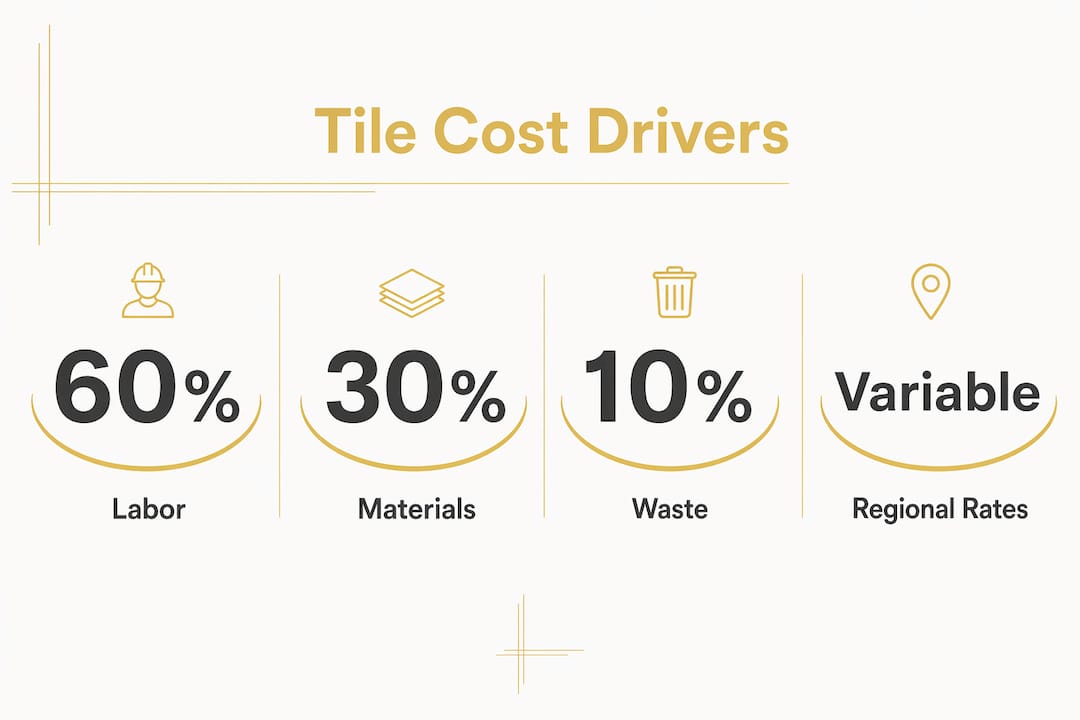
Labor is where bathroom tile pricing gets complicated, and where most homeowners are surprised. Labor constitutes a substantial portion of a typical bathroom tiling quote, meaning the tile itself is often the smaller part of what you pay.
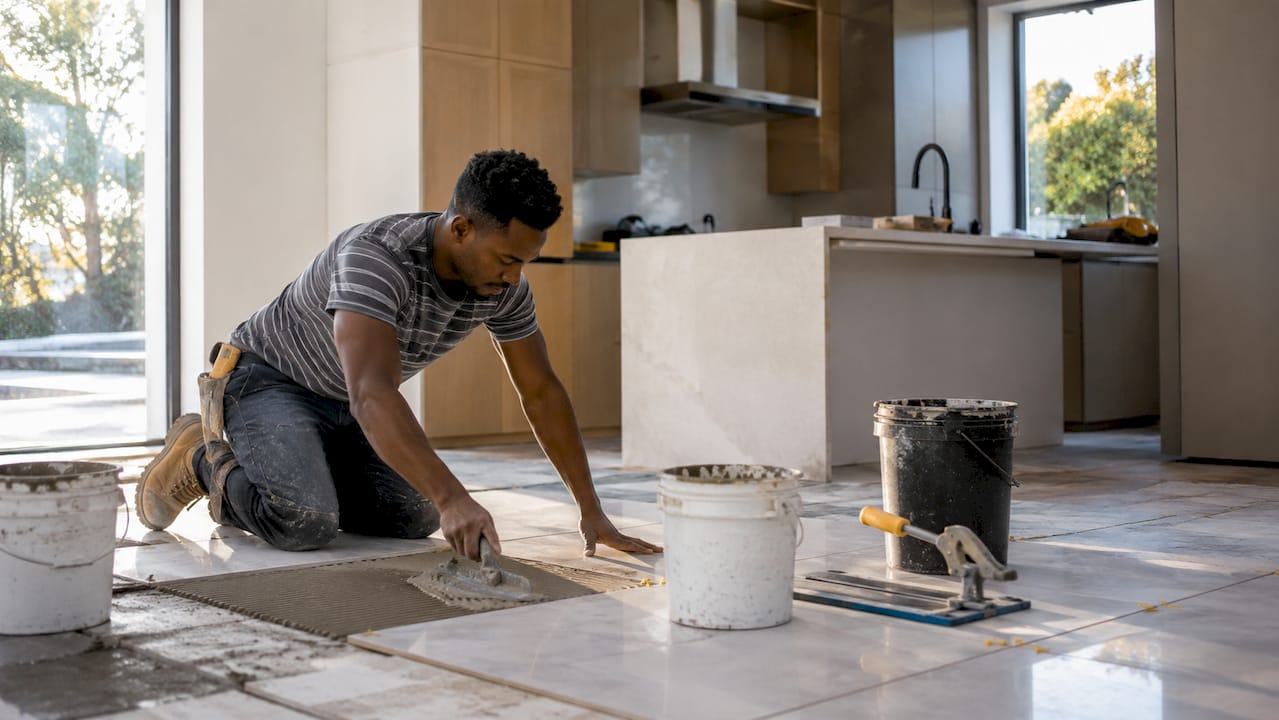
Pattern selection directly affects both labor hours and material waste. Straight-set layouts waste about 10% of tile, diagonal patterns waste 15%, and herringbone layouts waste 20%. Herringbone or chevron patterns add 15–75% more labor cost compared to a straight layout, and increase waste from 10% to 20%. Every tile is individually measured and cut at an angle.

Pattern alone can shift your total project cost by several hundred to over a thousand dollars on a typical bathroom.
Regional labor rates add another layer of variability, with notable differences between inland and coastal markets. Two bids on the exact same tile can differ by thousands of dollars simply because of where you live. Waterproofing and substrate preparation add further labor hours on top of the field tile work, and those steps are non-negotiable in wet areas.
Pro Tip: Always ask your installer to quote the pattern as a separate line item. A vague “install tile” line hides whether the herringbone or diagonal premium is actually priced in.
Style trends in 2026 are leaning toward larger formats and cleaner lines, and those choices carry real cost implications beyond just the tile price tag.
Edge finishing and trim add cost regardless of style. Schluter profiles or bullnose tile at floor-to-wall transitions run $8–$18 per linear foot installed. A shower niche, curb, or bench is detail work priced beyond the field tile, typically $150–$600 each depending on complexity.
DIY tile installation can save you 50–70% of the total project cost, which is a meaningful number. The catch is that a bathroom is one of the harder rooms to start with, and the cost of getting it wrong is high.
The practical rule: DIY the floor if it is a straight set in a dry area. Hire a professional for anything involving shower waterproofing. The labor savings are not worth the risk of a silent leak behind your tile. For guidance on managing your remodel budget, it helps to know exactly where professional expertise pays for itself.
Cutting costs on a tile project does not mean cutting corners. It means making smarter choices before the work starts.
For homeowners in the Jacksonville area, The Kitchen, Bathroom & Flooring Store offers a full range of tile and stone options across every price point, so you can compare materials in person before committing to a budget.
Labor rate variability is the factor most homeowners underestimate when comparing bids. Rates vary 40–60% between geographic regions, and a bid that looks low almost always has a reason.
Tile quality has a direct effect on your total cost, too, even when the material price looks attractive. Low-cost tile often results in increased breakage during cuts around bathroom fixtures, which means reordering mid-project and paying for a second installer visit. The savings on the tile itself evaporate quickly.
Waterproofing is the line item that separates a professional installation from a future repair bill. A proper shower membrane, whether Schluter Kerdi, RedGard, or a PVC pan liner, costs $400–$1,200 installed. Skipping it does not show for 12–24 months, then triggers $5,000–$15,000 in rot repair once water reaches the framing. Per TCNA Handbook standards, wet areas require a waterproof membrane. That is not an upgrade. It is a code requirement.
Substrate preparation carries the same logic. If the subfloor is not flat to 1/8 inch in 10 feet, you are either paying for self-leveling underlayment upfront or paying for cracked tile and callbacks later. Proper prep is where experienced installers earn their rate, and where the cheapest bid often quietly cuts corners.
At The Kitchen, Bathroom & Flooring Store, we handle every step of your bathroom tile project from material selection to professional installation, with no need to coordinate separate contractors. Our team works with you to match tile type, pattern, and budget so there are no surprises on the final invoice. Whether you are tiling a powder room floor or a full master bath with a walk-in shower, we bring the expertise to get it done right the first time.
Explore our bathroom remodeling packages or visit us in Jacksonville to see our full tile selection in person. We are here to make the process straightforward and the result something you will enjoy for years.
Bathroom tile costs are driven primarily by labor, which accounts for 50–70% of most quotes, followed by tile material, pattern complexity, bathroom size, and waterproofing requirements.
| Point | Details |
|---|---|
| Labor is the largest cost | Labor accounts for 50–70% of a typical bathroom tiling quote, more than tile material. |
| Material range is wide | Ceramic runs $1–$15 per sq ft; porcelain $3–$20; natural stone $7–$30 per sq ft. |
| Pattern adds real cost | Herringbone and chevron layouts add 15–75% more labor cost compared to a straight layout and increase tile waste from 10% to 20%. |
| Waterproofing is non-negotiable | Skipping a shower membrane saves an upfront cost but risks expensive future repairs. |
| Small rooms cost more per sq ft | Fixed mobilization minimums of $600–$1,000 spread over fewer square feet in small bathrooms. |