
Most Jacksonville homeowners pay between $3,400 and $15,600 to convert a bathtub into a shower, with most projects landing around a $7,000 midpoint. Your final number depends on materials, plumbing changes, and whether you choose a prefab kit or a custom tile build. Before you commit to anyone, get two or three comparable licensed quotes and confirm what permitting your project needs.
TL;DR:
- Costs vary widely based on materials and scope, with custom tiled and curbless showers reaching $8,000 to over $15,000, while simple inserts stay below $6,000.
- Plumbing moves, subfloor repairs, and upgrades like accessibility features can significantly increase final costs and project complexity.
- Jacksonville generally requires permits that can range from $85 to $295, with the entire process taking two to five weeks including inspections.
- Comparing detailed, itemized quotes from licensed contractors helps avoid surprises and ensures all scope and costs are clear.
- A full-service local provider can streamline the process, handle permits, and offer design options from consultation through installation.
Your price depends heavily on which type of shower you choose, so it helps to see the bands side by side before you start calling contractors.
A typical quote breaks down into demolition and tub removal, the new shower pan or base, waterproofing membrane, any plumbing work, tile or wall panels, fixtures and hardware, and debris disposal. Ask your contractor to itemize each of these so you know exactly what you’re paying for and where you have room to adjust.
Two homes with the same square footage can land in completely different price bands, and the difference almost always comes down to a handful of factors you can check before you ever request a quote.
Pro Tip: Ask your contractor to inspect the subfloor and plumbing layout before you finalize your budget, not after demolition has already started.
If you’re trying to trim costs without cutting corners on safety, our guide to reducing bathroom renovation costs walks through where it’s safe to save.
Jacksonville and Duval County generally require a permit for tub-to-shower conversions because the work alters plumbing, even when the new shower sits in the same footprint as the old tub. The Jacksonville Building Inspection Division calculates permit fees based on project valuation, with typical fees for this scope modeled between $85 and $295.
Here’s what the process usually looks like from start to finish:
On-site labor for most conversions takes three to seven days, but the full timeline, including permit review and inspection scheduling, typically runs two to five weeks. Build that buffer into your plans if you’re working around guests or a tight schedule.
Each conversion style comes with its own trade-offs in cost, maintenance, and how the finished bathroom functions day to day.
If safety and long-term independence matter more than upfront cost, a curbless design paired with a bench and grab bars is worth the investment. For a quick refresh on a tighter budget, prefab remains the practical choice for most households.
A little prep work before you call contractors saves you from apples-to-oranges bids that are impossible to compare fairly.
Comparing like-for-like scopes, not just bottom-line numbers, is the clearest way to avoid surprises once work begins.
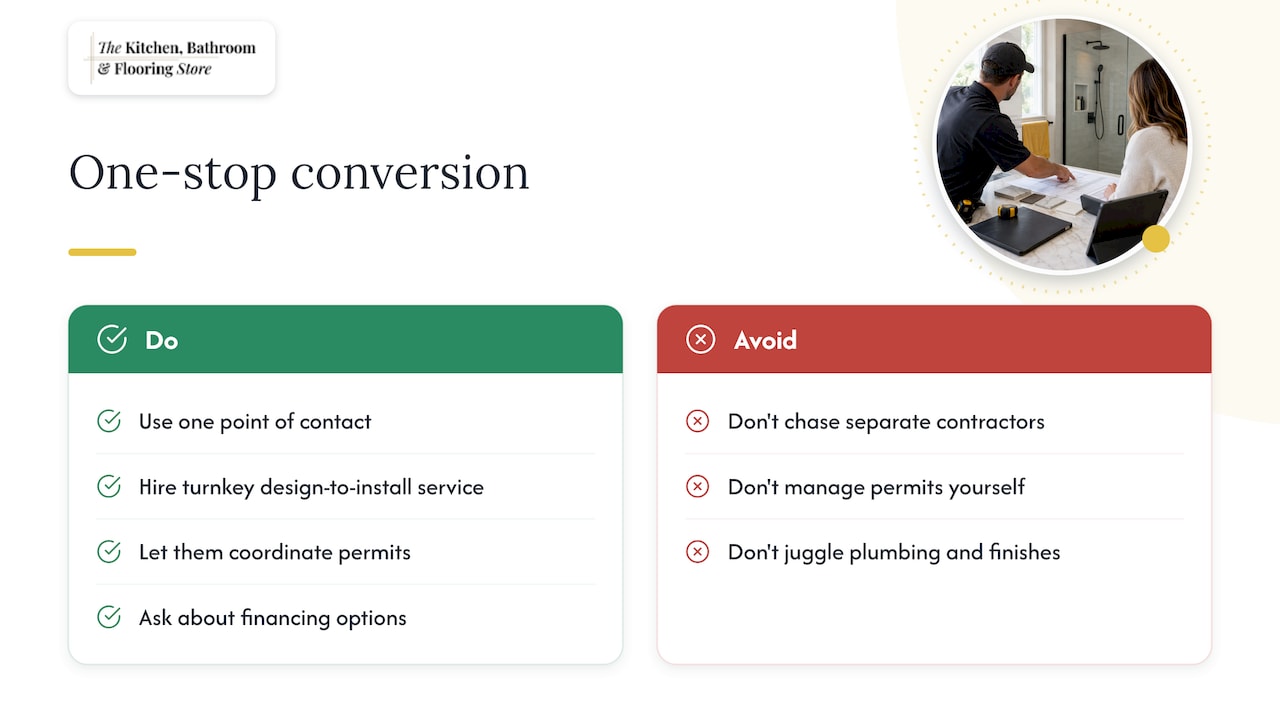
If coordinating permits, plumbing, and finish selections on your own sounds like more juggling than you want, The Kitchen, Bathroom & Flooring Store handles tub-to-shower conversions from design through installation under one roof. That means one point of contact for design assistance, product selection from bathroom showers and tubs, permit coordination, and project management, rather than chasing separate plumbers, tile setters, and permit runners yourself. Financing options are offered, and packaged bathroom remodeling options can provide a defined starting point for your project rather than a blank slate.
Homeowners who’ve gone through a conversion often say the permit timeline surprised them more than the cost did, especially when a drain relocation added a plumbing inspection they hadn’t planned for. Others mention that finishing touches, grout curing, caulking, door adjustments, took longer than the demolition itself. The common thread is a clear written scope agreed up front, with one person accountable for the schedule, which keeps small surprises from turning into big delays.
— Anna
A free consult with The Kitchen, Bathroom & Flooring Store includes a design review, a clear scope of work, a ballpark estimate, and guidance on what permitting your specific job will need. We offer financing options so you can budget your conversion as a monthly payment rather than one lump sum, and our bathroom remodeling packages give you a straightforward starting point to build from.
Visit our showroom or request an on-site estimate to see your options and get a written quote built around your bathroom, your budget, and your timeline.
In Jacksonville, a typical walk-in shower conversion costs between $3,400 and $15,600, with most homeowners landing near a $7,000 midpoint. The final number depends on whether you choose a prefab insert, a tiled shower, or a curbless accessibility design.
Statewide, Florida conversions generally run $3,000 to $12,000 installed, with many households falling in the $5,000 to $9,000 middle band. Materials, plumbing changes, and accessibility features are the biggest factors pushing a project toward the higher end.
Medicare does not typically cover bathroom modifications like tub-to-shower conversions, since these fall under home improvements rather than medical equipment or services. Homeowners looking for help with accessibility upgrades should check with their contractor about other local or state assistance programs available in their area.
Home Depot does not publish a flat rate since pricing depends on the local installer, materials chosen, and the scope of plumbing work required. For a transparent, itemized quote specific to your bathroom, it’s worth comparing a big-box estimate against a local full-service remodeler like The Kitchen, Bathroom & Flooring Store, which provides design, materials, and installation together.