
Expect to pay about $8 to $18 per square foot installed for most tile jobs in Jacksonville, which puts a 100-square-foot kitchen floor at a range starting around typical local costs before add-ons. A small bathroom often falls within a typical local cost range. Your final number depends heavily on subfloor condition, tile size, and whether your project needs a permit, so treat these ranges as a starting point, not a quote.
TL;DR:
- Moisture mitigation and subfloor preparation significantly impact costs, especially in older slabs or coastal areas with high humidity, adding up to $3 per square foot.
- Large-format porcelain and natural stone tiles require more careful handling and finishing, raising installation costs by up to 50% compared to standard ceramic or basic porcelain.
- Budgeting should include potential extra line items like tile removal, subfloor repair, waterproofing, and permit fees, which can inflate total expenses by hundreds of dollars.
- Smaller projects like bathrooms typically cost $800 to $1,800, while whole-home tile installations can reach between $12,000 to $22,000 or more depending on tile choice and layout complexity.
- Selecting a contractor who provides itemized quotes, verified licensing, and clear warranty terms helps avoid hidden costs and ensures project scope aligns with budget expectations.
Tile price per square foot varies more by material and size than almost any other factor, and understanding the split between materials and labor helps you read a contractor’s quote correctly.
On most jobs, materials account for roughly a third to half of the total, with labor making up the rest. When a quote comes in well below these ranges, ask what grade of tile and grout is included, because the gap usually shows up later in cracked grout lines or uneven surfaces.
Turning per-square-foot numbers into real budgets makes the math easier to plan around.
Mixing materials, tile in wet areas and durable luxury vinyl elsewhere, is common in Jacksonville homes and can significantly reduce a whole-home budget without sacrificing performance where it matters most.
Two contractors can look at the same room and land on very different numbers, and the difference almost always traces back to a handful of variables.
Pro Tip: Ask every contractor to break out materials, labor, demo, and subfloor prep as separate line items so you’re comparing the same scope across bids.
Northeast Florida’s humidity and the age of many local slabs make moisture a bigger factor here than in drier climates. Coastal salt air and seasonal rain can accelerate issues in homes built on older concrete, which is part of why local pricing data notes that Jacksonville slab and humidity conditions often affect project scope.
Installers frequently recommend crack-isolation membranes or moisture-mitigation systems for slab-on-grade homes, particularly near the coast. These add-ons typically run an extra $1 to $3 per square foot but can prevent cracked grout or tile delamination down the road. If your home is older or close to the water, ask for a pre-install moisture-vapor test and request the written recommendation in your quote, not just a verbal assurance.
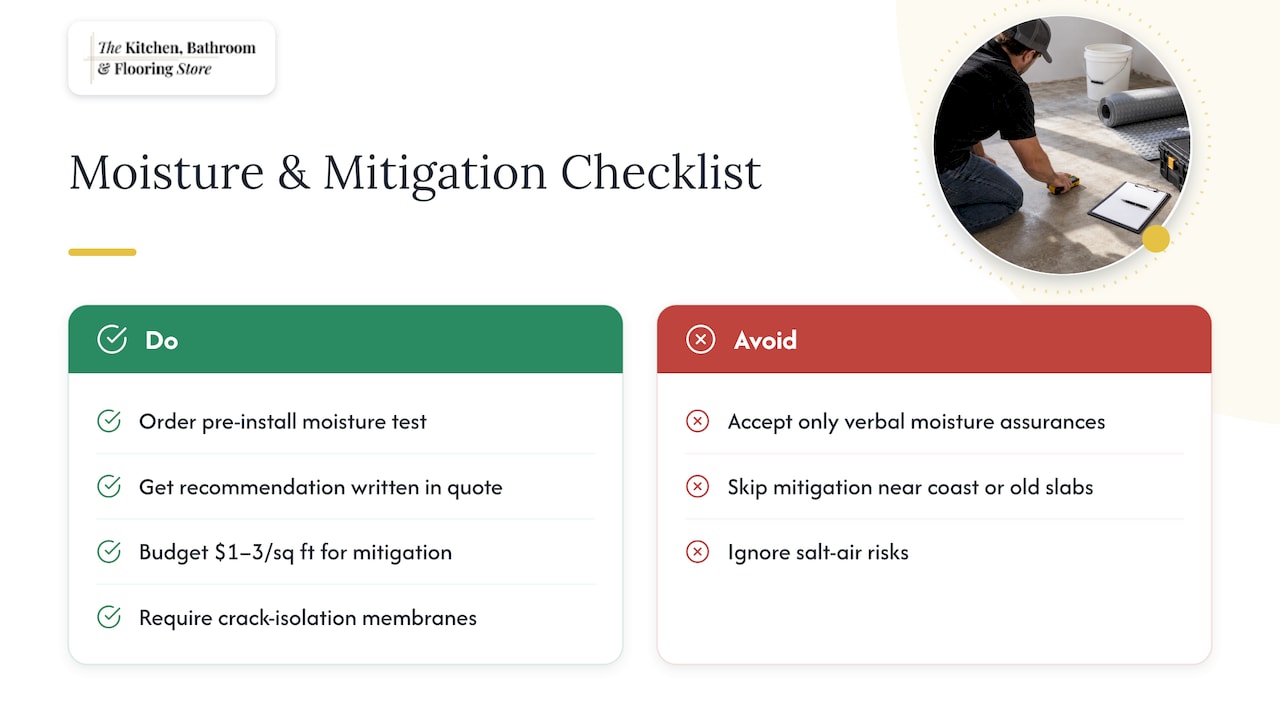
A comparable quote should spell out exactly what you’re paying for, and a short checklist keeps contractors honest.
Once the permit is pulled, you can verify its status directly with the city rather than relying on the contractor’s word alone.
A few line items tend to surprise first-time renovators, so it’s worth budgeting for them upfront.
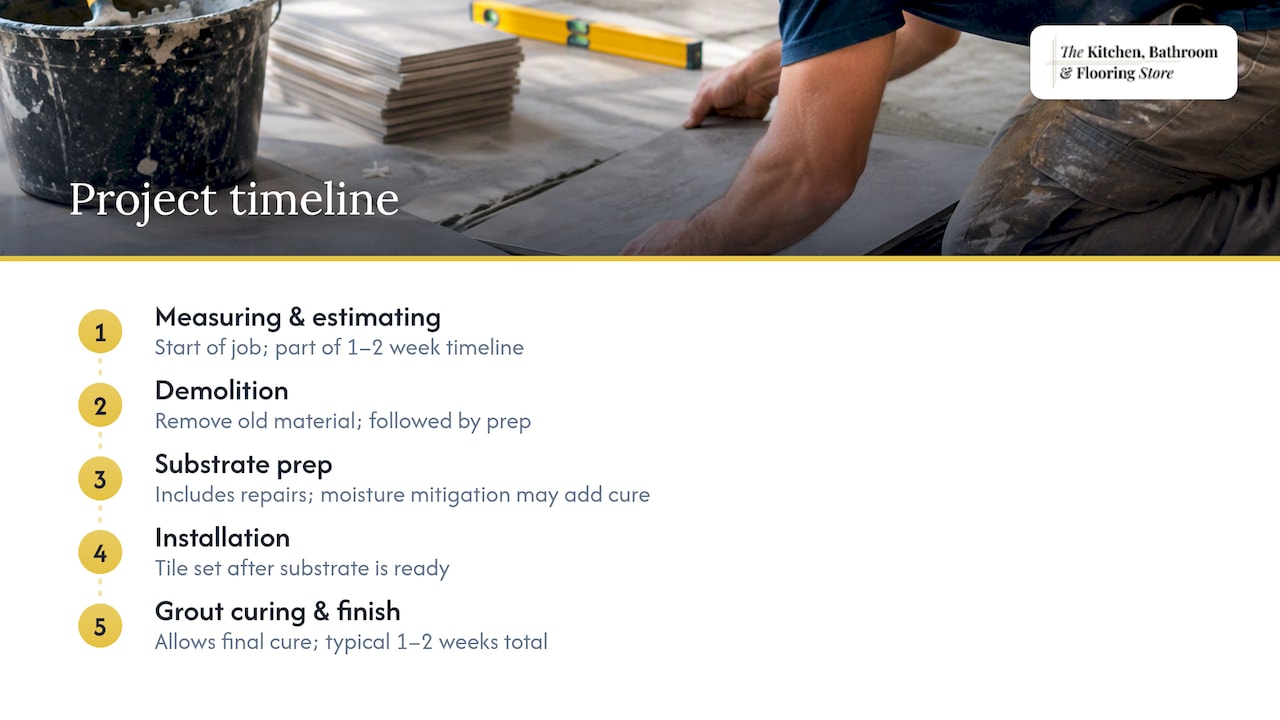
Most straightforward tile jobs move through measuring and estimating, demo, substrate prep, installation, and grout curing over one to two weeks for an average-sized room. Larger whole-home projects or jobs requiring subfloor repair can stretch to three or four weeks.
Moisture mitigation adds curing time before tile can go down, and any work requiring a permit depends on the City of Jacksonville’s inspection schedule, which can add several days to the timeline if an inspection is failed and a reinspection is needed.
Jacksonville’s older slabs and coastal humidity mean the cheapest quote isn’t always the smartest one. We’ve found homeowners do best when they budget for subfloor prep upfront rather than treating it as a surprise, and when you’re ready to see real numbers for your space, an on-site estimate beats any online calculator.
— Anna
Juggling a tile installer, a subfloor specialist, and a permit expediter on your own adds stress most homeowners don’t need. The Kitchen, Bathroom & Flooring Store handles design, product selection, and installation under one roof, so your budget and schedule stay in one place instead of scattered across multiple contractors.
If you’re ready to see real numbers for your home, explore tile and stone flooring options or schedule a visit to discuss financing for your renovation.
This guide draws on permit guidance from the City of Jacksonville, TCNA and ANSI installation standards, and local cost data from BuildPriced and HomeAdvisor. Homeowners comparing subfloor repair against slab issues may also find this concrete lifting overview useful, and investors estimating larger rehabs can reference this Jacksonville rehab estimator.
At $8 to $18 per square foot installed, a 1,000-square-foot tile job depends on tile type and subfloor condition. Local Jacksonville data shows mid-tier porcelain installs often land in the $12,000 to $22,000 range for 1,500 square feet.
A home larger than 1,500 square feet would cost more than the $12,000 to $22,000 range reported for 1,500-square-foot Jacksonville installs. Many homeowners manage this cost by mixing tile in wet areas with less expensive flooring elsewhere in the home.
A 10x10 bathroom is 100 square feet, so at $8 to $18 per square foot installed, expect $800 to $1,800 for the floor alone. Wall tile, a new vanity, or shower work would add to that total separately.
Subfloor condition and moisture mitigation cause the widest swings, since Northeast Florida’s humidity and older slab construction often call for crack-isolation membranes or leveling work. Tile removal alone can run $2 to $7 per square foot, and that cost is easy to miss if a quote doesn’t break out demo separately.
DIY saves on labor costs but shifts the risk of improper substrate prep, incorrect grout spacing, or failed moisture mitigation onto the homeowner, which can lead to costly repairs later. Given Jacksonville’s slab and humidity conditions, many homeowners find that professional installation following TCNA and ANSI standards protects their investment better than the upfront savings of doing it themselves.