
Yes, you can mix metals in a bathroom, and it usually looks better than matching everything. The method is simple: pick one dominant finish for the fixtures you touch and see most, add one contrasting accent finish, and repeat each metal so it looks planned. Do that in the right proportions, in the right places, and the room reads as designed, not random. Below is the plan we would hand a homeowner standing in a showroom with three faucet samples in their hands.
A bathroom has a lot of metal: faucets, a shower system, towel bars, a toilet paper holder, cabinet pulls, a mirror frame, light fixtures. Matching every one of them to a single finish is possible, but it can feel flat. Mixing adds depth, as long as the eye has an anchor. One manufacturer design guide puts the logic well: the eye needs a dominant finish before it can enjoy contrast, and Vatero’s designer guide recommends a 60/30/10 hierarchy for that reason.
The real risk is not mixing itself. It is buying each piece on its own, in different stores, over several months. That gives you a handful of finishes competing for attention. Choosing every item with the others in mind is what separates a curated look from a collection of leftovers.
The most common formula splits the visual weight of your metals into three parts:
| Role | Share of metal | Where it usually goes |
|---|---|---|
| Dominant finish | About 60 to 70% | Faucets, showerhead and shower controls, tub filler, towel bars |
| Secondary finish | About 20 to 30% | Cabinet hardware, mirror frame, lighting |
| Optional accent | 10% or less | Small decorative pieces and accessories |
These ranges come from Vatero’s guide. A Kohler design article uses a simpler two-thirds and one-third split, with the dominant metal on the largest fixtures such as the showerhead, faucets and towel bars, and the accent on the mirror frame, lighting and cabinet hardware. If you are new to this, use the two-metal version. Moen’s design tips also tell beginners to stick to two metals.
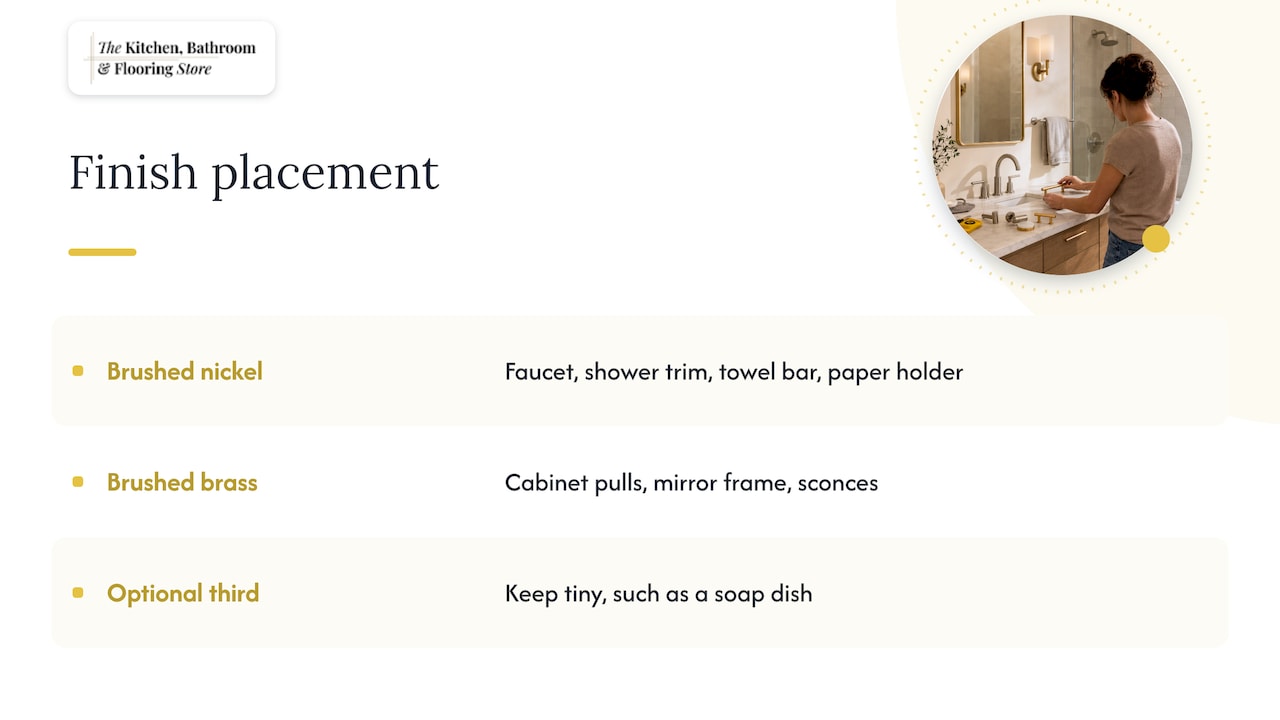
Imagine a typical 5-by-8 hall bath. You choose brushed nickel as the dominant finish: faucet, shower trim, towel bar and paper holder. You choose brushed brass as the accent: cabinet pulls, mirror frame and the sconces on either side of the mirror. Nickel carries most of the metal you touch and see at eye level, brass shows up in three separate places, and the room feels balanced. If you want a third finish, keep it to something tiny, such as a soap dish, and keep it small.
The dominant finish is the one you will live with the longest and the one that is hardest to change later, because it is on your plumbing. That is why cool metals such as chrome, stainless steel, nickel and pewter are the safe pick. Moen’s guide describes them as timeless neutrals that suit most styles, which makes them a good primary finish for fixtures you expect to keep.
Warm metals, such as brass and bronze, make strong accents. They are easy to swap later: a pull or a mirror frame costs far less to change than a shower valve and trim.
To decide, ask three questions:
If you are still choosing tile or paint, settle that first. Our guide on how to select a color scheme for your bathroom renovation walks through that order, and the metals follow from it.
The easiest way to avoid a scattered look is to assign finishes by function, not by room corner. Designer Megan Warren, quoted by The Spruce, splits bathroom metals into three groups:
Her advice is to stick with two main metals and not mix them inside the same group. In practice, the sink faucet matches the shower, and the cabinet hardware matches the lighting. That single habit does most of the work.
One rule of thumb from design writers: repeat the accent metal at least three times, so it reads as a choice. A single brass pull in a nickel bathroom looks like a mistake. Brass pulls, a brass mirror frame and brass sconces look intentional. If you are weighing lighting, our post on bathroom lighting ideas and sconce height covers placement so your accent finish lands where it should.
The safest combinations contrast clearly in both color and sheen. Designer Shauna Glenn told The Spruce that brushed nickel with shiny brass works, chrome with matte black works, and chrome with shiny brass does not. Her principle: different metals should be truly different, including whether they are polished, matte or brushed.
Other combinations designers list as reliable, per Vatero:
| Dominant | Accent | Look |
|---|---|---|
| Brushed nickel | Brass | Warm and classic, a favorite for traditional and transitional baths |
| Chrome | Matte black | Crisp and modern |
| Matte black | Brushed nickel | Moody but balanced |
| Brushed gold | Matte black | Bold and contemporary |
Warm and cool pairings need a bridge so they feel deliberate. Designer Wendi Gee’s primary bath example uses aged brass on the faucet and towel rings, matte black on the mirror frame and accessories, and brushed nickel on the shower fixtures. Black acts as the neutral that ties the warm and cool together. That is a three-metal room, so it is one for confident planners; most families will be happier with two.
The biggest mistakes come from finishes that are close but not the same. Copper beside brass, for example, can look like a mismatch instead of a contrast. Chrome next to shiny brass is another one designers steer away from, as noted above.
Here are the other traps:
This one is practical, not stylistic. Sallie Lord of GreyHunt Interiors told The Spruce that you cannot switch brands within the shower, because the rough-ins behind the wall differ. Her example: a Delta brass faucet should not be paired with a Moen brass shower system. Every piece in one finish should come from the same brand. You can change brands when you move on to the next finish.
That matters if you are planning a mix. You might buy nickel faucets from one maker and brass accessories from another, which is fine. But the valve, trim, showerhead and tub filler in the same finish need to be a set. Decide this before demolition, because the valve is installed inside the wall.
A second practical point: finishes can look different from one product line to the next, even when the label says the same thing. Order matching pieces together, and check them against each other, not against a photo.
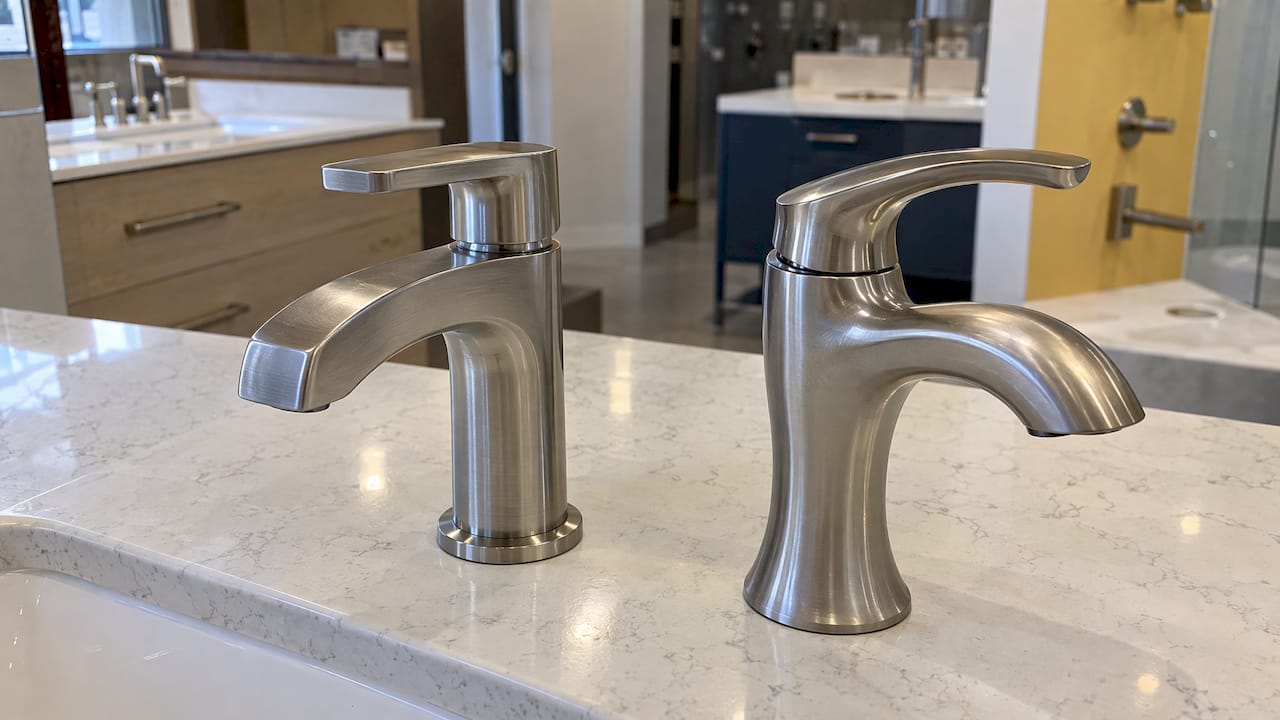
Photos and screens lie. Warm bulbs make brass glow and cool bulbs make nickel look blue. Follow this short routine:
These steps follow the same logic as the Designer Drains design guide, including the point about checking drain and fastening requirements. Doing this at a showroom, where cabinets, tile and fixtures sit side by side, saves guesswork. If you are also choosing hardware to go with other surfaces in a refresh, this piece on choosing bathroom hardware finishes shows how finishes interact with the rest of the room.
Metal is only one part of the palette. Tile and stone have undertones, too. Warm beige tile with cool chrome can feel disconnected, while the same tile with brushed brass looks natural. Our bathroom tile trends and tile in modern bathrooms guides help you pick tile first, so the metals have something to match.
On a budget, a mixed-metal plan is actually forgiving. Spend on the long-lived pieces in the dominant finish, and put the accent finish on items that are cheap to replace later: pulls, a mirror frame, a light. Our post on how fixtures shape your bathroom remodel budget explains where fixture costs add up, and the bathroom fixture coordination guide covers keeping them consistent. Small rooms benefit from restraint too; see our small bathroom upgrades for ideas.
Jacksonville bathrooms deal with humidity most of the year, so finish matters beyond looks. Chrome stays bright for decades with basic care, while unlacquered brass changes color within weeks, according to Build-Construct. If you want a brass look without the changing patina, choose a lacquered or sealed brass finish for pulls and lighting, and put the finish you want to look the same for years on the fixtures that see the most water: the faucet, shower valve and drain.
Most mixed-metal mistakes we see are not taste problems. They are planning problems. Faucets come from one place, pulls from another, lighting from a third, and nobody ever laid the samples side by side.
That is why we like to handle the bathroom as one project. When design help, product selection and installation sit under one roof, the finishes get decided together: the vanity, tile, shower, fixtures and hardware. You do not have to coordinate several contractors or discover on installation day that the valve and trim do not belong together.
Our advice is simple. Pick one dominant metal you will be happy with for years, choose one accent that makes the room feel like yours, and let us help you check them against your tile and cabinets in our showroom before anything is ordered.
Anna
If you are redoing the whole bathroom, your metals are best chosen along with the vanity, tile and shower, not after them. We offer bathroom remodeling packages with personalized design assistance, product selection, professional installation and project management, so you do not need other contractors. Our approach includes transparent pricing, financing options and an in-house warranty. Browse bathroom vanities and showers and tubs with your finishes in mind, and bring your tile samples.
We serve homeowners across Jacksonville and Duval and St. Johns counties. Visit our showroom or start from our main page to talk through your project.
Avoid pairing finishes that are close but not identical, such as copper with brass, which can look like a mistake. Designers also advise against chrome with shiny brass. Contrast works best when the metals differ clearly in color and sheen.
Matte black is the most recommended partner, and designers also cite warm brass in a softer finish. Make sure the accent is clearly different from chrome rather than a close shade. Keep chrome on the plumbing and put the accent on pulls, lighting and the mirror frame.
No. Items in the same group should match, such as the sink faucet and shower trim, or the cabinet pulls and lighting. Different groups can use different finishes. Stick to two metals and repeat each one so the choices look planned.
For faucets and accessories, often yes. For the shower, no: all parts of one finish should come from the same brand, because the rough-in valves behind the wall differ. You can change brands when you move to the second finish.
Yes, but keep it simple. Use two finishes, with the dominant one on the plumbing and the accent repeated on two or three small items. Too many finishes in a small room make it feel crowded.