
Full-service remodeling is defined as a single company managing every phase of a renovation, from initial design and permit applications through construction and final walkthrough. Unlike hiring separate contractors for each trade, this integrated approach puts one team in charge of design, scheduling, licensed trades, inspections, and project closeout. Standards like the International Residential Code (IRC) and the National Electrical Code (NFPA 70) govern the technical work, and a full-service remodeler handles compliance on your behalf. The result is consistent quality, fewer communication gaps, and a project that moves in the right order. At The Kitchen, Bathroom & Flooring Store, we manage the entire process so you never have to coordinate between a designer, a plumber, and a tile installer on your own.
A full-service remodeling company manages design, permits, construction, and project management as a unified process with a single point of contact. That structure means each phase feeds directly into the next without gaps or miscommunication. Here is how the lifecycle unfolds.
The project starts with a detailed consultation. You describe your goals, budget range, and timeline expectations. The team assesses the existing space, identifies structural constraints, and documents what you want to change. This conversation locks in the project scope before any money changes hands.
A designer translates your goals into a workable layout, selecting materials, fixtures, and finishes. Decisions made here, such as cabinet dimensions, tile selections, and appliance specs, directly affect the permit drawings and material orders. Finalizing these choices before permits are submitted prevents costly revisions later. The design phase is where cohesive results are built or lost.

Permit review timelines range from 5 business days to 12 weeks depending on project complexity and local workload. That range matters because it is the single most unpredictable variable in any remodeling schedule. A full-service team submits permit applications and tracks approvals so you are not chasing paperwork.
The construction phase follows a strict order:
Skipping steps in this sequence is the most expensive mistake in remodeling. Each phase physically depends on the previous one passing inspection.
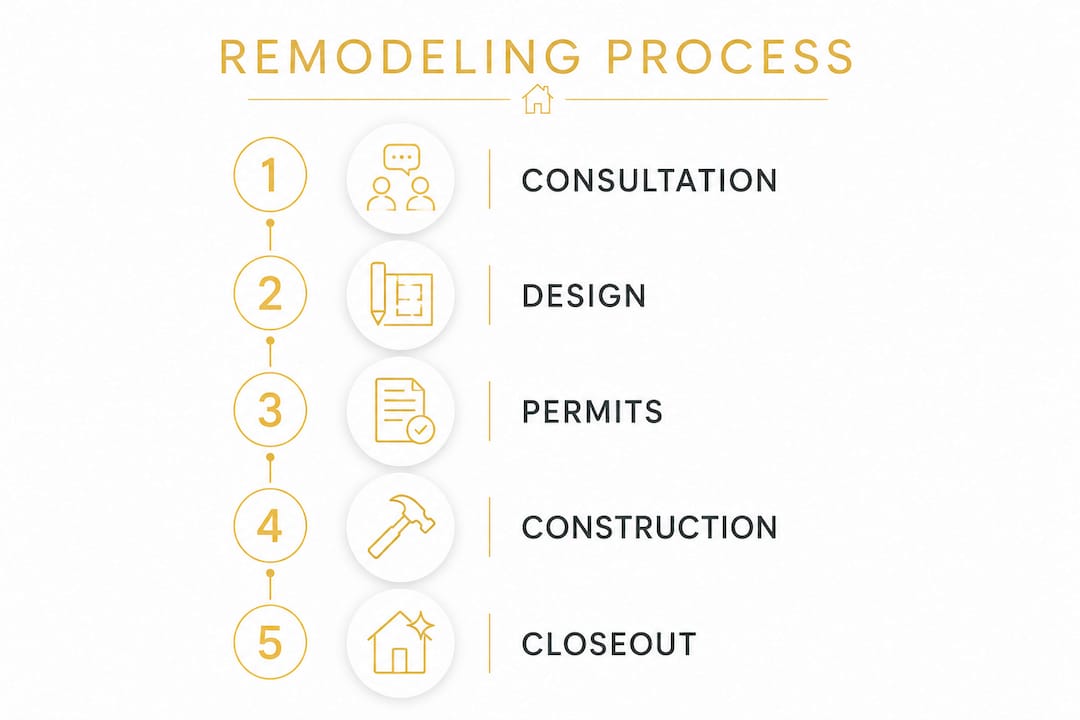
The project ends with a final walkthrough and a punch list, which is a written record of any incomplete or deficient items. Substantial completion means the space is usable. Final completion means every punch list item is resolved, final inspections are passed, and lien waivers from all contractors are delivered. Final payment is released only at that point.
Pro Tip: Ask for lien waivers from every subcontractor before releasing final payment. Without them, a subcontractor who was not paid by the general contractor can place a lien on your property even if you paid in full.
Major delays are rarely caused by slow crews. The real culprits are permit review time, long-lead material deliveries, and slow homeowner decisions. Knowing this changes how you plan.
The most effective way to protect your schedule is to order long-lead items, such as custom cabinets, windows, and appliances, the same week you submit your permit application. Lead times on custom cabinetry often run 8–12 weeks. Waiting until permits are approved before ordering adds two to three months to your project.
Budget discipline follows the same logic. Professional project managers recommend carrying a 10–20% budget contingency and a 20–30% schedule buffer for remodeling projects. These are not padding. They cover the real unknowns: what is behind the walls, inspection re-schedules, and shipping delays.
Key practices that protect both budget and schedule:
“The homeowner’s most powerful tool is a locked scope. Every decision made after permits are submitted costs more and takes longer than the same decision made before.”
Pro Tip: Build your remodeling budget checklist before the design phase ends. Pricing surprises shrink when you have a complete material list in hand.
Labor constitutes roughly 65% of total remodel costs, with materials and soft costs making up the remainder. Design fees, permits, and insurance can account for 20–30% of the overall budget. These numbers mean the visible finish materials, tile, countertops, and fixtures, represent a smaller share of total cost than most homeowners expect.
The core difference between full-service and piecemeal remodeling is accountability. With piecemeal contracting, you hire a designer, a general contractor, a tile installer, and a plumber separately. When something goes wrong between trades, you are the one resolving it. With a full-service remodeler, that coordination is the team’s job.
| Category | Full-service remodeling | Piecemeal contracting |
|---|---|---|
| Point of contact | Single team manages all trades | Homeowner coordinates each contractor |
| Design and build alignment | Integrated from day one | Gaps common between design intent and field execution |
| Permit management | Handled by the remodeler | Homeowner or each contractor files separately |
| Cost structure | May carry a coordination premium | Lower per-trade cost, higher management burden |
| Best for | Complex, multi-trade projects | Small, single-trade jobs with experienced owners |
| Risk of rework | Lower due to sequenced oversight | Higher when trades work independently |
Full-service remodeling carries a coordination premium. That cost buys you professional oversight, sequenced scheduling, and a single contract. For a kitchen or bathroom renovation involving plumbing, electrical, tile, and cabinetry, that premium is almost always worth it. For a single-room paint job or a straightforward floor replacement, piecemeal contracting is a reasonable choice.
Integrated teams improve communication, quality, and timeline consistency. The design and construction teams share the same drawings, the same schedule, and the same accountability structure. That alignment prevents the common scenario where a designer specifies a fixture that a plumber cannot install in the available space.
Your job during a full-service remodel is to make decisions on time and communicate clearly. The licensed trades handle all code-critical work. You handle the choices that drive the project forward.
Core homeowner responsibilities:
Milestone-focused communication is more effective than daily check-ins on task progress. Asking “what do I need to decide this week?” is more productive than asking “what did the crew do today?”
Final payment should be withheld until all punch list items are resolved, final inspections are passed, and lien waivers are collected from all contractors. This protects your property from potential liens filed by unpaid subcontractors.
Pro Tip: Keep a dedicated project folder with signed contracts, approved permit drawings, material specs, and all change orders. If a dispute arises, this documentation resolves it quickly.
For a deeper look at how to structure your responsibilities from day one, the one-stop remodel service guide covers the full homeowner checklist in practical detail.
Full-service remodeling succeeds when scope is locked early, long-lead materials are ordered at permit submission, and homeowners track milestones rather than daily tasks.
| Point | Details |
|---|---|
| Lock scope before permits | Every change made after permit submission costs more and delays the schedule. |
| Order long-lead items early | Custom cabinets and appliances have 8–12 week lead times; order at permit submission. |
| Carry a budget contingency | A 10–20% contingency covers unknown conditions found during demolition. |
| Track milestones, not tasks | Focus on permit approval, rough inspection, cabinet install, and punch list completion. |
| Withhold final payment | Release final payment only after punch list completion, final inspection, and lien waivers. |
The homeowners who get the best results are not the ones who ask the most questions during construction. They are the ones who made every decision before the first wall came down.
I have seen projects run beautifully on paper fall apart because a homeowner could not commit to a countertop material until week three of a four-week kitchen remodel. That one delay pushed cabinet installation, then countertop templating, then plumbing rough-in. The project finished six weeks late. The contractor was not slow. The decision was.
The other pattern I see consistently is homeowners who confuse oversight with micromanagement. Showing up daily to watch the crew does not improve quality. It disrupts sequencing and slows the team. Weekly milestone check-ins, a clear punch list, and a locked scope do more for your project than any amount of daily supervision.
One more thing most guides skip: the air quality and environmental conditions inside your home during and after construction matter more than most homeowners realize. Demolition creates dust and debris that settle into HVAC systems. A post-construction air quality check is a worthwhile step before you move back in.
Trust the process. A full-service team earns its coordination premium by keeping the sequence intact, the permits current, and the trades accountable to each other. Your job is to make decisions fast and let the professionals do their work.
— Anna
The Kitchen, Bathroom & Flooring Store handles the full remodeling process for Jacksonville homeowners, from design consultation through final installation, with no need to manage separate contractors.

Our team covers design assistance, product selection, licensed installation, and project coordination under one roof. Whether you are planning a complete bathroom overhaul or a kitchen refresh, we bring every phase together with a single point of contact. Our bathroom remodeling packages are built to cover design through finish, with transparent milestones and clear pricing. Visit our Jacksonville showroom to meet with a design consultant and get a clear picture of what your project involves before you commit to anything.
A full-service remodeler is a company that manages every phase of a renovation under one contract, including design, permits, construction, and final inspection. The homeowner has a single point of contact rather than coordinating separate trades.
Timeline depends on project scope and permit review times, which range from 5 business days to 12 weeks. A kitchen or bathroom remodel typically runs 6–16 weeks from permit approval to punch list completion.
Project managers recommend a 10–20% budget contingency to cover unexpected conditions found during demolition, such as water damage, outdated wiring, or structural issues.
Verify the contractor holds a current state license, carries general liability and workers’ compensation insurance, and provides a written contract with milestone-based payment terms. Ask for references from projects similar in scope to yours.
Release final payment only after the punch list is fully resolved, the final municipal inspection is passed, and you have received signed lien waivers from every subcontractor and supplier on the project.